
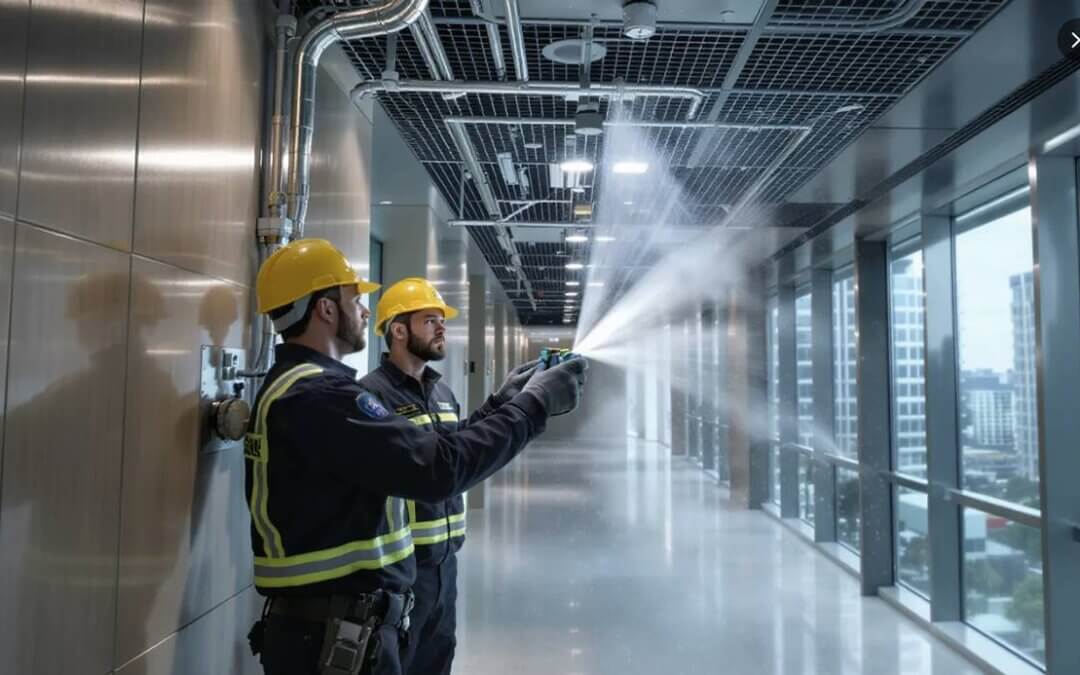
High-rise buildings present unique fire safety challenges that demand meticulous planning, advanced technology, and strict regulatory compliance. In the UK, the emphasis on sprinkler systems as a cornerstone of fire protection has intensified following incidents like the Grenfell Tower tragedy. With 2025 bringing updated standards such as BS 9991:2024, property owners and fire safety professionals are under greater pressure to ensure that sprinkler systems are not only installed but maintained to the highest possible standards.
Sprinkler systems have proven to be a life-saving technology, controlling fires in over 90% of cases according to 2025 UK-wide statistics. However, the effectiveness of these systems depends on proper installation, consistent maintenance, and adequate water supply, elements that present significant challenges in high-rise contexts.
Understanding the Role of Sprinkler Systems in High-Rise Fire Safety
Sprinkler systems are designed to detect and suppress fires at an early stage, preventing flames from spreading and reducing heat and smoke generation. In high-rise buildings, they serve as a critical line of defense, especially given the complexity of evacuation procedures and the potential for rapid fire spread through vertical shafts and interconnected spaces.
A 2025 study revealed that fires were fully extinguished in 27.6% of cases where sprinklers activated, with the remainder being controlled until fire services arrived. This data underscores their role in mitigating damage and saving lives.
See our Fire Sprinkler Case Studies
Outcome | Percentage | Year |
|---|---|---|
| Fires controlled | 90.7% | 2025 |
| Fires extinguished | 27.6% | 2025 |
As shown above, while sprinklers don’t always fully extinguish fires, their ability to control the situation is invaluable in high-rise scenarios where rapid response is essential. In tall buildings, where smoke can travel quickly through stairwells and lift shafts, the ability to slow or halt fire growth buys critical time for evacuation and emergency services. This is particularly important for vulnerable occupants, such as the elderly or those with mobility impairments, who may need more time to reach safety.
See our Automatic Smoke Vent System
Furthermore, sprinkler systems reduce the intensity of a blaze, lowering temperatures and preventing flashover events, conditions where a room ignites almost instantly, which can be catastrophic in confined spaces.
Regulatory Updates and Sprinkler Systems Compliance Requirements
The introduction of BS 9991:2024 has brought significant changes to fire safety in residential high-rises. The standard outlines design, management, and operational requirements for buildings, with a strong emphasis on sprinkler systems installation and maintenance.
Key updates include:
- Mandatory sprinkler installation in certain high-risk residential buildings.
- Detailed inspection schedules with documented proof of compliance.
- Enhanced integration with other fire protection systems, such as alarms and smoke control.
The British Safety Council advises that safety professionals should review both existing and updated specifications to ensure suppliers understand the new requirements. Compliance is no longer optional; it is a legal and moral obligation. These updates also reflect lessons learned from past tragedies, ensuring that design considerations address both prevention and mitigation. For example, BS 9991:2024 now requires more robust redundancy measures, meaning systems must remain operational even if one part fails. This ensures a higher degree of reliability.
Failure to comply can lead to severe legal consequences, including fines and prosecution, while also exposing building owners to reputational damage and loss of tenant trust. The updated codes encourage collaboration between architects, engineers, and fire safety consultants from the earliest design stages, creating safer buildings from the ground up.
Installation Challenges for Sprinkler Systems in Existing High-Rise Buildings
Retrofitting sprinkler systems into older high-rise buildings is a complex process. Structural limitations, outdated plumbing, and the need to minimize disruption to residents all contribute to the difficulty.
Common challenges include:
- Limited space for pipework and tanks.
- Ensuring adequate water pressure in taller structures.
- Coordinating with tenants to minimize inconvenience.
In some cases, water mist systems are being adopted due to their reduced water consumption and ability to limit water damage, especially beneficial in buildings with sensitive electrical infrastructure. Additionally, heritage-listed buildings present unique constraints, requiring careful routing of pipes to avoid damage to protected architectural features. Engineers must often use creative solutions, such as modular piping systems or concealed installations behind false walls, to preserve aesthetics while meeting safety requirements.
Cost is another significant factor; retrofitting can run into hundreds of thousands of pounds, making funding and grant opportunities crucial for feasibility. Project timelines can also be extended due to the need for phased work, allowing residents to remain in their homes during installation.
Maintenance and Inspection Best Practices for Sprinkler Systems
A sprinkler system is only as reliable as its maintenance schedule. Nationwide Fire Sprinklers notes that neglecting maintenance can render even the best-designed systems ineffective.
Best practices include:
- Monthly visual inspections of control valves and gauges.
- Annual functional testing of sprinkler heads.
- Regular flushing of pipes to prevent blockages.
- Integration of IoT-based monitoring for real-time health checks.
Property managers should establish a clear maintenance protocol, supported by documentation that meets BS 9991:2024 requirements. This includes logging all inspections, repairs, and replacements in a centralised digital system that can be easily audited.
Training in-house staff to recognise early warning signs of system issues, such as corrosion on pipes, leaks, or changes in water pressure, can help prevent failures before they occur. Partnering with accredited fire safety contractors ensures that maintenance is not only compliant but also optimised for the building’s unique design and risk profile.
In addition, periodic drills involving the sprinkler system and other fire safety equipment can validate that all systems work seamlessly together.
Case Studies: Successful Sprinkler Systems Activations
Recent reports from SprinklerSaves UK (Dec 2024 – Jan 2025) highlight several successful activations in tall residential buildings. In one incident, sprinklers extinguished a kitchen fire in a London flat before significant damage occurred. Another case saw sprinklers control a fire in a communal area, allowing safe evacuation and minimal property loss.
Incident Location | Outcome | Date |
|---|---|---|
| London residential flat | Fire extinguished | Jan 2025 |
| High-rise communal area | Fire controlled | Dec 2024 |
These examples reinforce the importance of having a properly maintained system ready to respond at any moment. In both cases, the rapid activation of sprinklers not only prevented further fire spread but also reduced smoke damage, meaning residents could return to their homes much sooner.
Insurance claims were significantly lower compared to similar incidents in non-sprinklered buildings, demonstrating the economic benefits alongside life safety. Furthermore, these case studies have been used in public awareness campaigns to encourage other property owners to invest in sprinkler systems, showing real-world proof that these installations save lives and money.
Future Trends in High-Rise Fire Protection
Looking ahead, several trends are shaping the future of fire safety in UK high-rises:
- Wider adoption of water mist systems for specific applications.
- Integration of smart monitoring tools for predictive maintenance.
- Increased public education to improve acceptance of retrofitting projects.
- Stronger collaboration between fire safety professionals, property managers, and regulatory bodies.
Durasteel Insights notes that the Grenfell inquiry has driven long-term changes in safety expectations, making fire protection an ongoing priority rather than a one-time installation. Emerging technologies such as AI-powered analytics are expected to play a growing role, enabling systems to predict potential failures before they occur.
There is also a push toward environmentally friendly fire suppression methods that use less water and minimise chemical runoff, aligning with broader sustainability goals. Additionally, virtual reality training for residents and staff is becoming more common, allowing people to experience simulated evacuation scenarios and understand how sprinklers operate during a fire.
Implementation Strategies for Property Managers Using Sprinkler Systems
To meet both safety and regulatory demands, property managers should:
- Conduct a full fire risk assessment in line with BS 9991:2024.
- Engage qualified fire protection services for installation and maintenance.
- Implement a documented inspection and testing schedule.
- Communicate clearly with residents about the benefits and necessity of sprinklers.
By following these strategies, managers can ensure they are not only compliant but providing the highest level of safety. They should also budget for ongoing maintenance costs and factor in upgrades as technology evolves, avoiding the risk of systems becoming outdated.
Regular resident engagement sessions can help address concerns, answer questions, and build trust, ensuring cooperation during installation or maintenance work. Involving tenants in fire drills and safety meetings fosters a culture of preparedness and reinforces the role of sprinklers as part of a holistic safety plan.
Conclusion
High-rise fire protection in the UK is entering a new era of accountability and technological advancement. Sprinkler systems remain at the heart of this shift, offering proven effectiveness when installed and maintained correctly. With updated standards like BS 9991:2024 setting the bar higher, property owners, managers, and safety professionals must embrace proactive compliance and ongoing education.
The challenges, whether structural, logistical, or perceptual, are real, but so are the life-saving benefits. By investing in reliable sprinkler systems, adhering to maintenance best practices, and staying informed on regulatory updates, stakeholders can protect both lives and property, ensuring the safety of high-rise living for years to come.
The future of fire safety will depend on a willingness to adapt, collaborate, and innovate, ensuring that tragedies of the past are never repeated. Ultimately, the commitment to robust sprinkler systems is an investment not just in buildings, but in the people who call them home.
